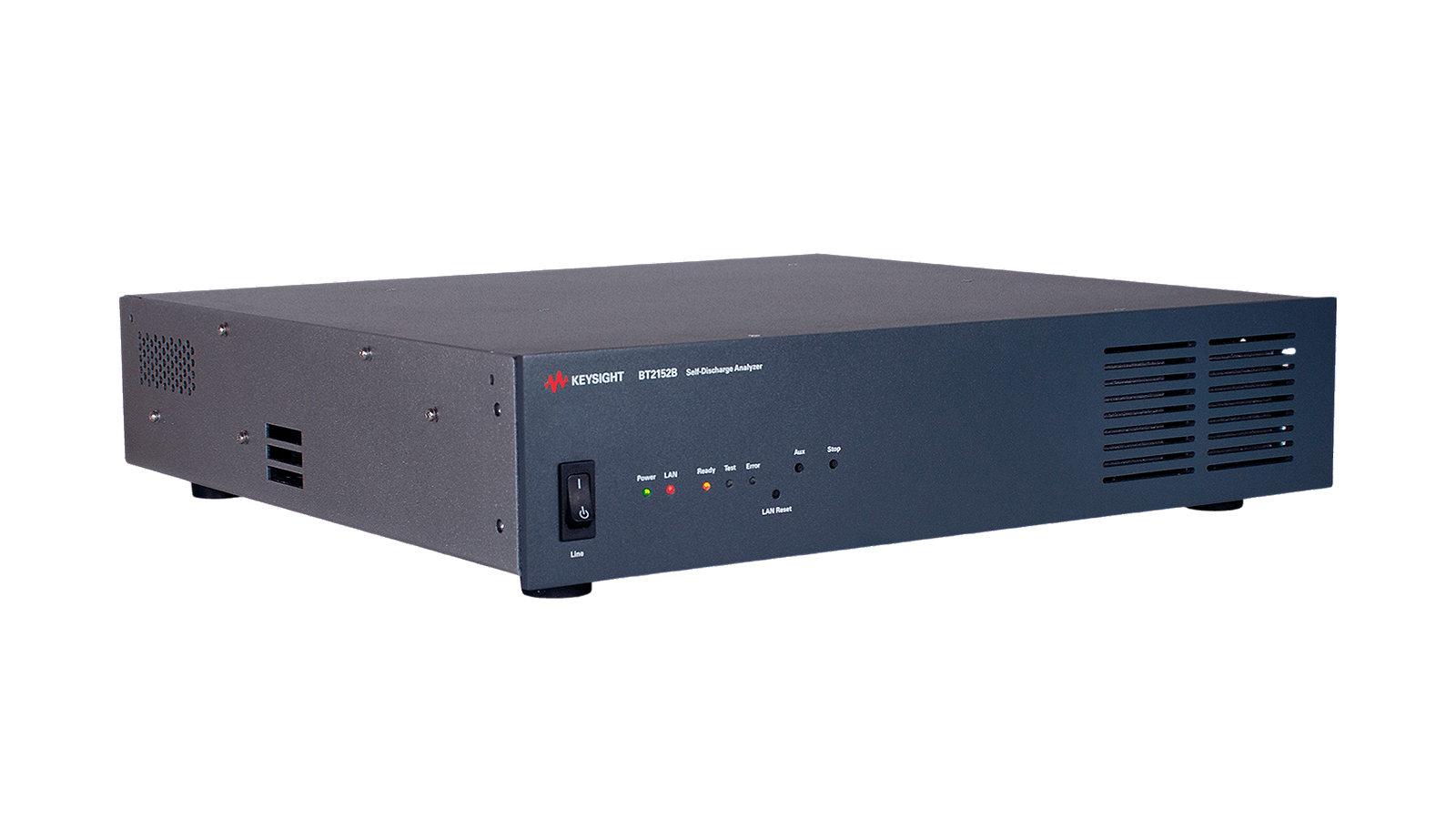
The Self-Discharge Analyzer BT2152B measures self-discharge current of Li-Ion cells, providing a dramatic reduction in WIP inventory for cell manufacturers.
| Maximum power | 0 |
| Form factor | Rack mounted |
| Measurement type | N/A |
| Battery Types | Cell |
| Mains voltage | 240 VAC |
Test individual battery cells, modules, and complete battery packs for in-depth characterization at each stage of development, ensuring quality and performance at every scale.
Designed with regenerative capabilities, often exceeding 90% energy recovery, so energy from the battery during discharge cycles is fed back into the grid rather than being dissipated as heat.
Define, control, and monitor complex test sequences, including performance, functional, aging, and environmental tests with built-in compliance for global industry standards.
Support electrochemical impedance spectroscopy (EIS) on multiple channels to characterize a cell’s impedance across a frequency range, helping identify potential issues or degradation mechanisms.
| Battery Types | Module, Pack, Cell, CellModulePack |
| Form factor | Cabinet, Dual cabinet, Benchtop, Rack mounted, Combined |
| Maximum power | N/A to >10 MW |
| Measurement type | Differential voltage, Temperature, Digital IO, Communications, Analog in, Power supply, Analog out |
| Mains voltage | 48 VDC to 480 VAC |
The Self-Discharge Analyzer BT2152B measures self-discharge current of Li-Ion cells, providing a dramatic reduction in WIP inventory for cell manufacturers.
Li-Ion cell manufacturers keep far greater numbers of cells in work-in-process inventory than they would like because of the time they are required to keep their cells in the aging process.
| Today, most of the total aging time is often caused by the time required to determine if the cells’ self-discharge behavior is within acceptable limits. This large time period is driven by how long it takes for the change-in-OCV (ΔOCV) measurement. Reducing the amount of time cells spend in the aging step as work-in-process inventory provides savings that flow directly to the bottom line. | Improvements in the aging process and resulting cost savings from directly measuring self-discharge current can be seen by examining a typical model of the formation and aging process in cell manufacturing, and comparing the traditional OCV method vs. directly measuring self-discharge current of the cells. |
Determining good vs. bad self-discharge performance is based on a 2-step process. In the first step, the cells which are clearly good and clearly bad are separated from “suspect” cells by a ΔOCV test done after the 5-day aging period, where ΔOCV = (OCV2 – OCV1). The cells designated as “suspect” are then subjected to a longer aging period followed by a second ΔOCV test, where ΔOCV = (OCV3 – OCV2). Most of the cells require less aging with this process, but the “suspect” portion of the cells requires much longer aging to determine whether they exhibit acceptable self-discharge behavior.
Determining good vs. bad self-discharge performance is again based on a 2-step process. The first step uses the same ΔOCV test where ΔOCV = OCV2 – OCV1. The “suspect” cells then have a direct self-discharge measurement. This measurement typically takes about 1 hour or less, eliminating the very long traditional “suspect” aging period, typically lasting 4 weeks or more.
| If 10% of total cell production is classified as “suspect”, requiring additional test or aging beyond the first ΔOCV test, using direct self-discharge measurement reduces the total aging time for “suspect” cells by ~81% (7 vs. 37 days). This method provides a 30% reduction in the total number of cells in aging due to elimination of the long “suspect” aging step. This directly impacts Work-in-Process inventory and facilities requirements. | You can download a cost savings model for Working Capital Costs and Facilities Costs comparing the ΔOCV method vs. direct self-discharge measurement (SDM). This model is built using Microsoft Excel, and the model worksheet is available below for you to download and modify to fit your situation for each type of cell you make. |
Up to 32 channels of self-discharge current measurement available in 4-channel increments
Innovate at speed with curated support plans and prioritized response and turn-around times.
Get predictable, lease-based subscriptions and full lifecycle management solutions—so you reach your business goals faster.
Experience elevated service as a KeysightCare subscriber to get committed technical response and more.
Ensure your test system performs to specification and meets local and global standards.
Make measurements quickly with in-house, instructor-led training, and eLearning.
Download Keysight software or update your software to the newest version.
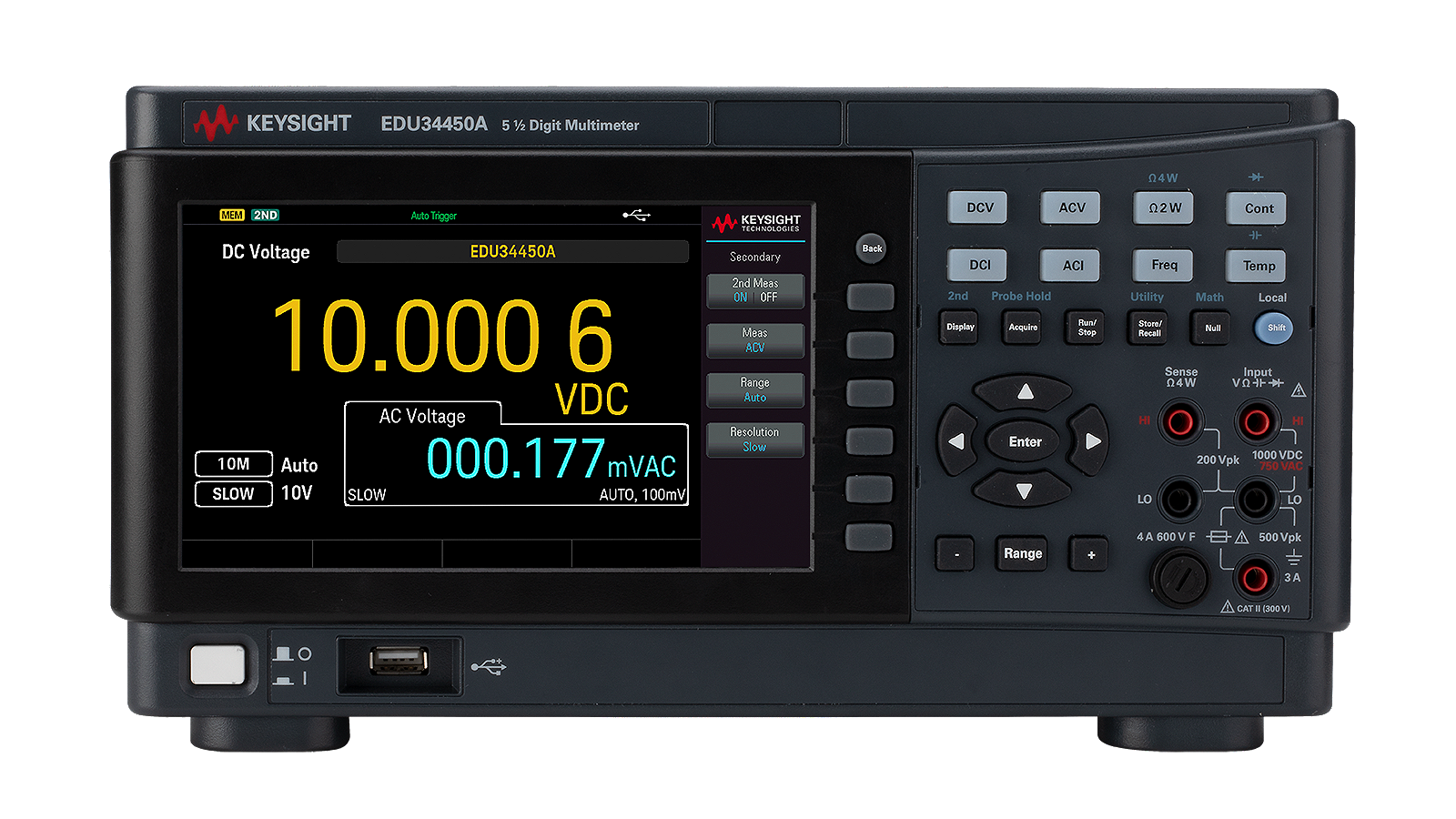
The EDU34450A is a bench DMM with dual-display 5.5-digit-resolution digital multimeter with up to 110 readings/s measuring rate for speed-critical tests.
The EDU190A is an anodized metal frame that enables one EDU series instrument to stack on each other. It can be securely attached to the wall or lab bench.
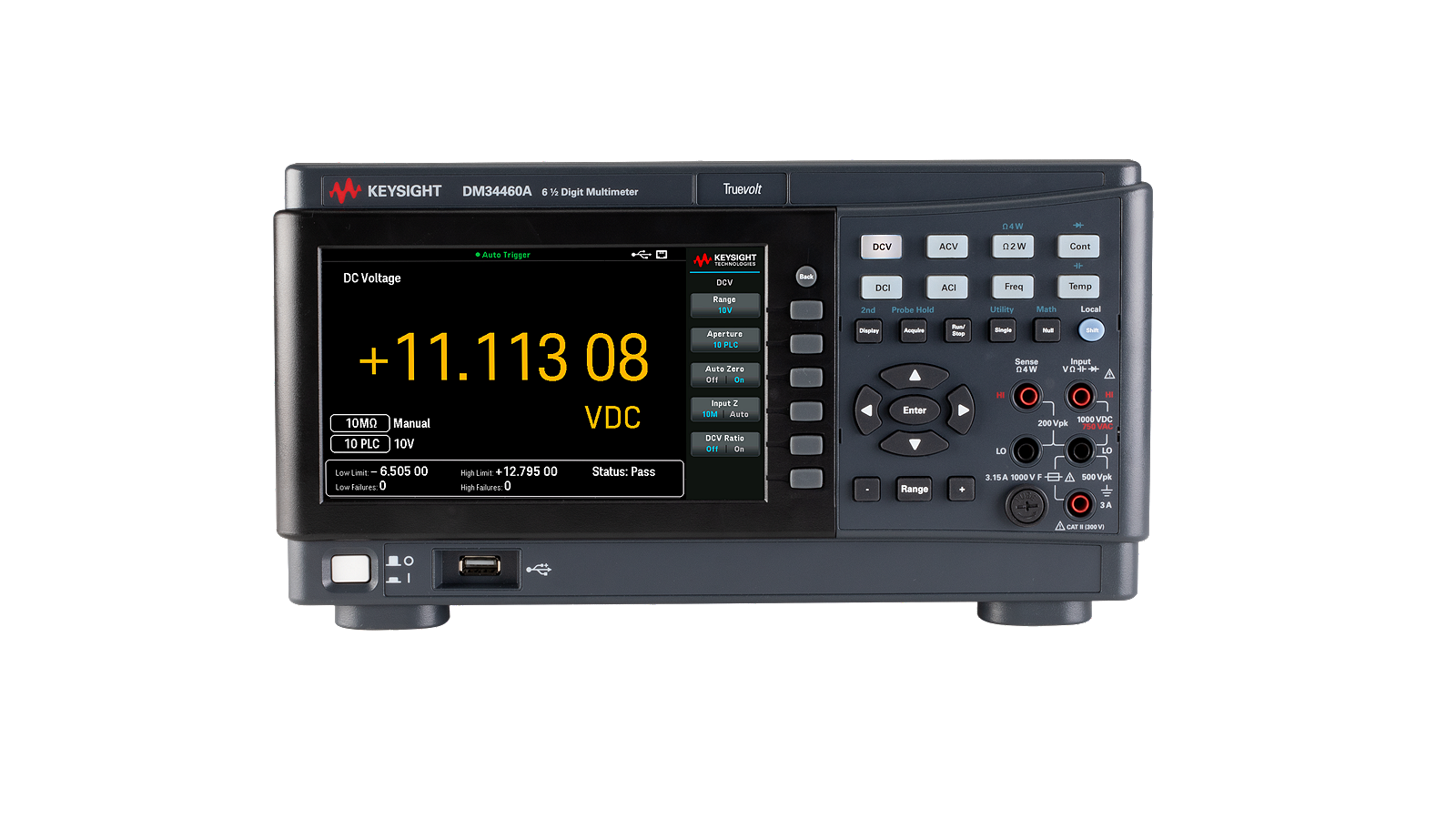
The Keysight DM34460A series 6.5-digit dual-display digital multimeter uses Truevolt technology to perform accurate hardware design validation and debugging.
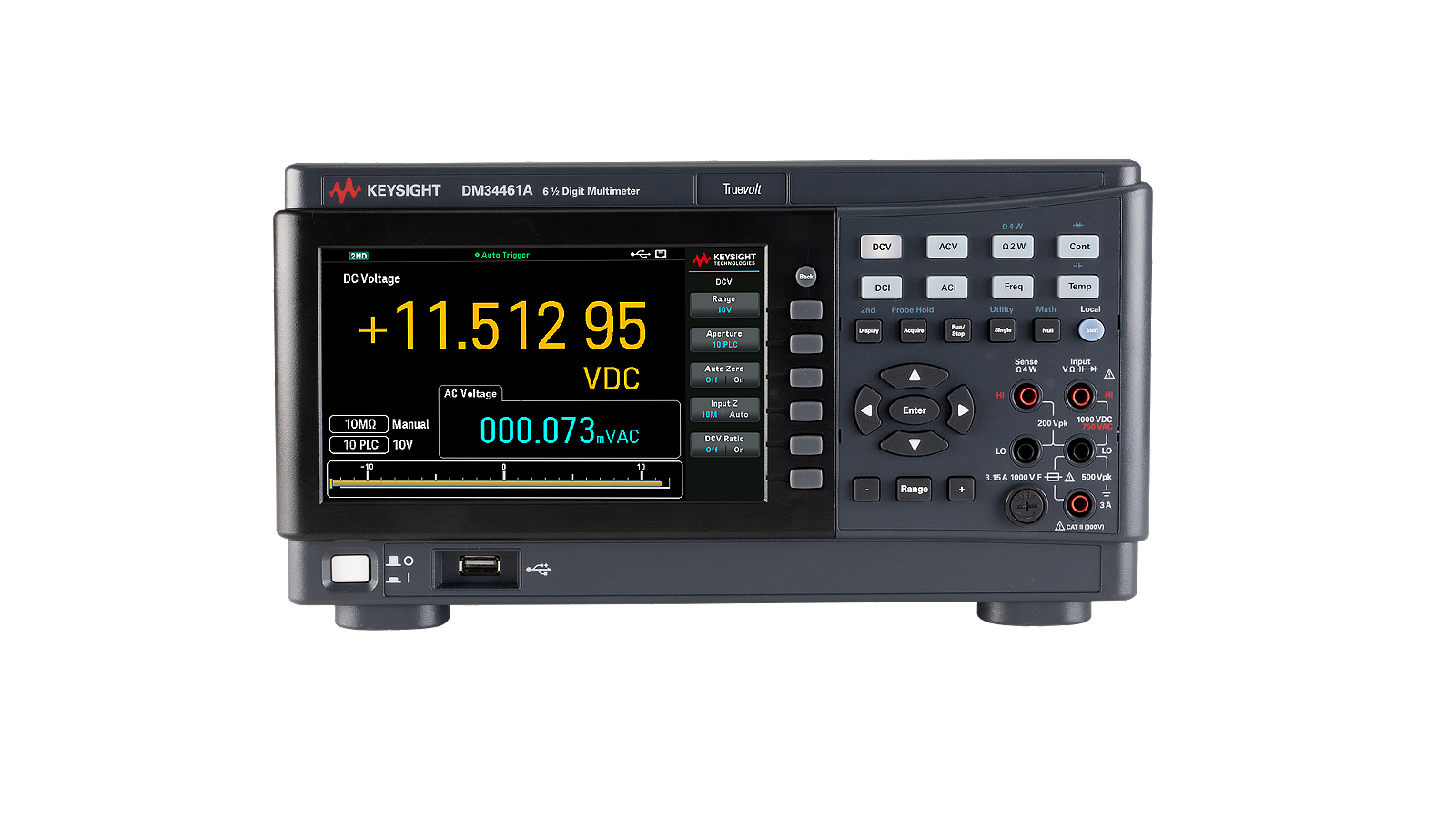
The Keysight DM34461A 6.5-digit dual-display digital multimeter uses Truevolt technology to perform accurate hardware design validation and debugging.